Which water to use is settled elsewhere on this site; this guide is about running the water supply like a shop process, from jug to drain.
The comparison of distilled and tap water is covered in our dedicated guide, so here we focus on operations: where to buy water, how to store it, how long it stays good in the tank, and how to keep several counters consistent. A written water routine is cheap and removes a surprising number of unexplained readings, especially in multi-location pawn and jewelry businesses.
- Buy distilled water in sealed jugs, label the open date, and refill the tank from the same source every time.
- Let new water reach room temperature and settle before the first reading, ideally by storing a jug beside the machine.
- Water softener output, mineral water, and warm tap water should be avoided because they change dissolved gas, residue, and bubble behavior.
Single approved source
One brand or one supplier reduces variation across counters and staff.
Room-temperature storage
A jug stored near the tank equilibrates before use, which reduces bubbles.
Open-date label
Water that has been open for weeks can pick up dust and organisms.
Change trigger
Define cloudiness, odor, or a fixed number of days as the signal to replace tank water.
Sourcing, storing, and room temperature
Treat water like a consumable with a purchasing rule. Pick one distilled water product from a reliable supplier and keep stock for a month at a time. Sealed gallon jugs are cheap, keep for a long time unopened, and are easy to label. Avoid deionized or reverse osmosis water from unknown sources, which can vary in quality, and never use water from a softener, since the exchange process leaves sodium and other residues. Write the approved product on the tank lid or SOP so nobody swaps it casually.
Temperature matters more than people expect, not for the density of water itself but for what cold water does inside the tank. Cold water holds more dissolved gas, and as it warms in the room it releases tiny bubbles that cling to samples and the hanger. Store the jug beside the machine so it reaches room temperature before use, and fill the tank at the start of the shift rather than just before the first customer. After filling, let the tank sit for ten to fifteen minutes before running the calibration weight.
Change schedule, top-ups, and multiple counters
A written change schedule keeps the water clean and removes guesswork for new staff. For a busy counter, change tank water weekly or whenever it turns cloudy, develops a film, or smells off. Between changes, top up evaporation with the same distilled source, not with leftover water from earlier. Record every change with the date and initials in a log sheet. If you operate several counters, assign someone to review those logs monthly so one location does not quietly stretch the schedule.
Consistency across locations is the real prize. When two stores test the same piece and get slightly different results, the first questions should be about water and placement. Standardize the product, the fill line, the settling time, and the calibration step so staff in any store follow the same routine. For training, include a short refresher on bubbles and surface tension. If you add a wetting agent to the tank, set the exact quantity as policy, because an inconsistent drop of soap can shift readings between counters.
- Dispose of old water down the drain; never reuse it.
- Keep a spare sealed jug in the back for emergencies.
- Replace the tank lid or cover if dust accumulates quickly.
Shop water routine at a glance
Keep the routine below posted beside the machine and review it at every quarterly staff meeting. It is short enough to read in a minute and detailed enough that a new employee can follow it during their first week without asking for help on every step, which keeps counters consistent.
| Task | Rule |
|---|---|
| Water type | Distilled only, one approved brand |
| Storage | Sealed jug near the machine, open date labeled |
| Tank change | Weekly or when cloudy |
| Top-up | Same distilled source, never leftovers |
| After change | Settle 10 to 15 minutes, then calibration weight |
Recommended densimeters for this workflow
| Product | Best for | Price tier | Editor view | Amazon |
|---|---|---|---|---|
| RODIETO 600 g Gold Purity Densimeter | Pawn and mixed jewelry intake with heavier solid chains | Value | Editor assessment: Strong | Check Latest Price → |
| Alfa Mirage GK-300 | Jewelry counters buying solid gold under ~250 g | Premium | Editor assessment: Excellent | Check Latest Price → |
Best Value / Best for Pawn Capacity
RODIETO 600 g Gold Purity Densimeter
- Best forPawn and mixed jewelry intake with heavier solid chains
- Price tierValue
- Editor viewEditor assessment: Strong
Best Overall for Jewelry Desks
Alfa Mirage GK-300
- Best forJewelry counters buying solid gold under ~250 g
- Price tierPremium
- Editor viewEditor assessment: Excellent
Best Value / Best for Pawn Capacity
RODIETO 600 g Gold Purity Densimeter
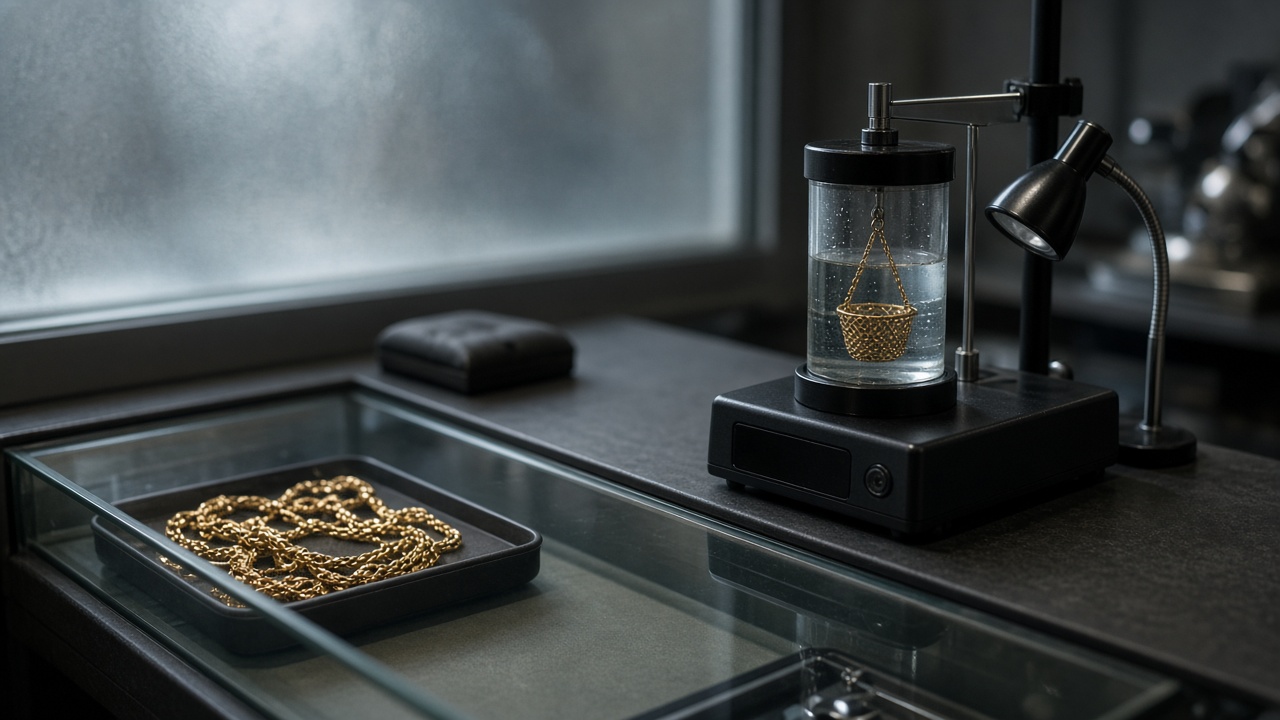
Key takeaways
- 600 g headroom for pawn-weight solid chains
- Shop-class 0.001 density without lab pricing
- Confirm seller, accessories, and exact capacity
Pawn and mixed jewelry intake with heavier solid chains
You need Japan-brand prestige more than usable capacity
Quick snapshot
Pros
- 600 g headroom covers most solid chain intake
- 0.001 g/cm³ density resolution is the shop-class sweet spot
- Karat / purity / density in one workflow
- Usually ships as a complete tank + hanger kit
Cons
- Generic brand—seller quality and support vary
- Listing titles can be noisy; you must confirm exact capacity
- Not a tungsten-proof bar tester on its own
- Lower brand recognition if ownership wants “made in Japan” optics
Why we picked it
Why it earns the badge
RODIETO’s 600 g class is our best value pick because capacity is the feature that actually saves pawn and mixed jewelry desks from buying twice. A beautiful 300 g branded unit that cannot weigh your heaviest regular chain is a failed purchase—no matter how clean the karat UI looks in the product photos. This kit targets the real workflow: solid scrap, solid chains, fast karat/density/purity screen, and a complete tank + hanger setup so you are not hunting accessories after the box arrives.
Who it is ideal for
Ideal for pawn shops, mixed jewelry buyers, and scrap desks where solid intake regularly lands between 200 g and 500 g. The 0.001 g/cm³ density resolution is the shop-class sweet spot: fine enough for solid karat banding without paying lab-SKU prices. Managers also get a second number (density or purity %) when karat mode looks off, which helps when a second staffer re-checks a disputed piece.
Who should skip it
Skip it if brand prestige is a boardroom requirement—“made in Japan” optics matter in some retail ownership conversations—or if you only ever buy light rings under ~150 g. In that lighter jewelry-only case, a 300 g premium unit may feel cleaner on a glass retail counter and leave more budget for training and distilled-water discipline. Also skip any densimeter as a standalone answer for bullion bars you suspect are tungsten-filled; density alone will not settle that fight.
What real buyers get wrong
Cross-check Amazon seller ratings and the in-box list (scale, tank, hanger, power, any claimed printer) before you checkout. Across generic 600 g densimeter listings, the honest low-star complaints cluster around missing English instructions, accessories that were pictured but not shipped, confusing multi-SKU titles, and buyers who tested hollow or gem-set jewelry then blamed the machine. Those are avoidable with a pre-purchase checklist: confirm capacity on the live listing, screenshot the accessory list, decline hollow/gem-set pieces at intake, and treat the result as a first pass. Do that, and a value 600 g kit like this becomes the workhorse most pawn desks actually need.
Key specs → desk benefits
600 g capacity
Fewer “piece won’t fit” moments on pawn days when solid chains run heavy.
0.001 g/cm³ density resolution
Fine enough for solid scrap karat banding without paying lab-SKU prices.
Karat + purity + density display
Managers can spot-check a second number (density) when karat mode looks off.
Best Overall for Jewelry Desks
Alfa Mirage GK-300
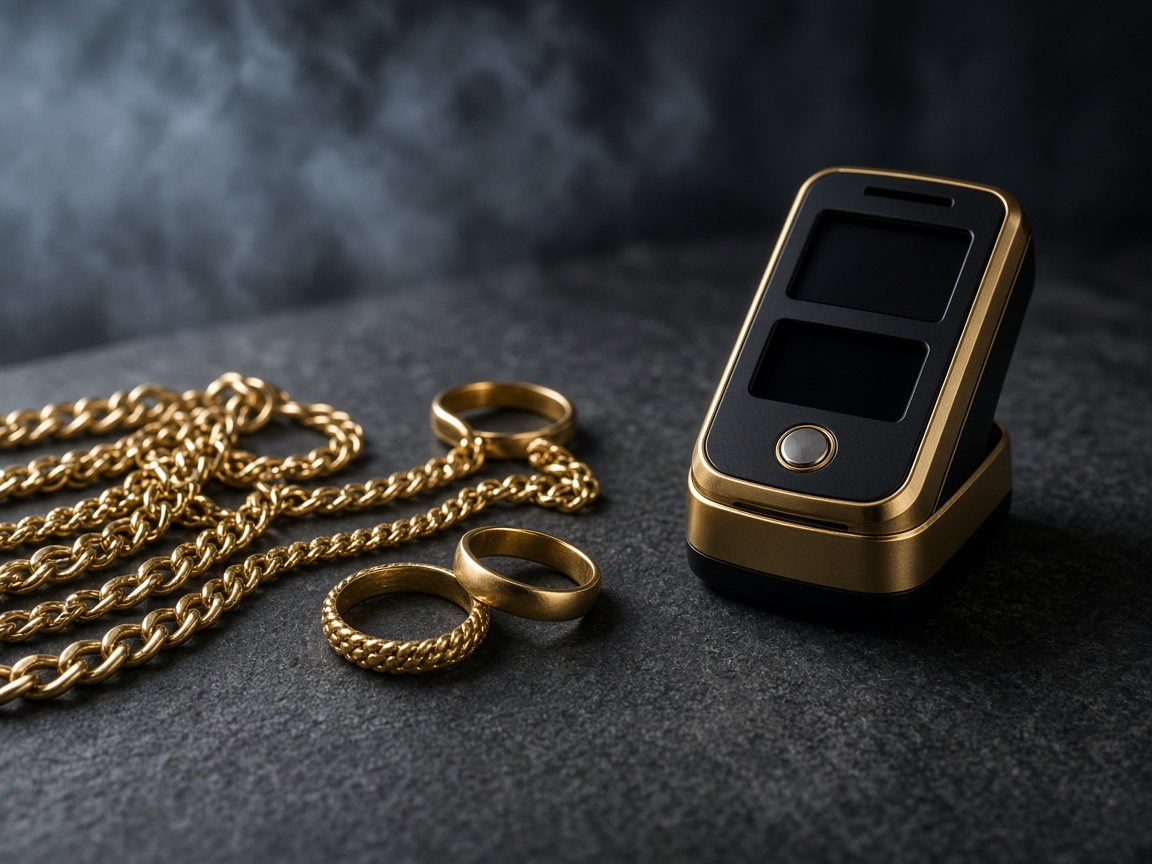
Key takeaways
- Best when solid jewelry stays under ~250 g
- Karat language staff can explain to customers
- Skip if heavy chains already crowd 300 g
Jewelry counters buying solid gold under ~250 g
You regularly buy heavy chains or bars over 300 g
Quick snapshot
Pros
- Karat modes built for gold buying—not a generic lab densimeter UI
- Japan-made brand that shop owners recognize for warranty optics
- Doubles as a gram scale so trade-ins stay on one footprint
- Non-destructive first pass—no acid stains on retail-ready pieces
Cons
- 300 g ceiling fails many pawn-weight solid chains
- Premium price vs generic 600 g Amazon kits
- Still cannot test hollow or gem-set jewelry (physics limit)
- Some buyers complain about learning the water-hang workflow on day one
Why we picked it
Why it earns the badge
We picked the Alfa Mirage GK-300 as the best overall starter for jewelry stores because it is built around karat language, not just a bare density number. On a retail counter, that matters more than most buyers admit on day one. A salesperson can take a solid trade-in, run the air weight and water weight, and talk in K14 / K18 terms the customer already understands—without translating a raw density chart mid-conversation. The Japan-made positioning also helps when an owner asks why you are not buying the cheapest no-name kit on Amazon. Warranty optics and brand familiarity reduce pushback from partners who have seen too many generic electronics fail after a few busy seasons.
Who it is ideal for
This machine is ideal if your solid intake mostly stays under about 250 g: rings, solid bracelets, light scrap lots, and estate pieces that are clearly solid metal. Treat the 300 g ceiling as a hard workflow limit, not a marketing number. If your desk routinely sees thick Cuban chains, stacked scrap bags, or solid pieces that regularly flirt with 280–300 g, capacity—not brand prestige—should win, and you should move to a 600 g shop densimeter before you outgrow the GK-300 mid-purchase.
Who should skip it
Who should skip it: pawn shops with heavy-chain days, coin desks handling bars, budget-first buyers who only need a rough karat band once a week, and anyone who thinks a densimeter will replace acid or XRF for hollow or gem-set goods. Manufacturer guidance is blunt on the physics limits: hollow jewelry, stone-set pieces, and metals with density very close to gold (including tungsten cores in bars) are outside the trustworthy zone. Those are not “bugs” in the GK-300—they are limits of Archimedes testing itself.
What real buyers get wrong
When you dig past star ratings on Amazon-style densimeter listings, the recurring 1-to-3 star themes are rarely “karat mode is fake.” They are operator and expectation problems: air bubbles clinging to textured scrap, the sample touching the tank wall, testing hollow electroformed jewelry that returns falsely low density, missing English manuals on generic kits, and buyers who expected an assay certificate instead of a first-pass screen. Train solid-sample rules on day one, keep distilled water and a soft brush at the tank, and use a written threshold for when density results escalate to XRF. Done that way, the GK-300 becomes a reliable buyer aid on a jewelry desk rather than a mysterious black box that staff avoid after one awkward customer conversation.
Key specs → desk benefits
300 g capacity / 0.01 g weight resolution
Stable enough for solid rings and most bracelets, with gram-scale precision that keeps scrap payouts honest.
K9–K24 karat + purity % modes
Staff can explain a karat band to a customer in one sentence instead of translating raw density charts.
Densimeter + scale in one unit
You avoid buying a separate jewelry scale for intake weighing on the same counter.
Buying decision
Confirm tank volume and included accessories on the live listing.
FAQ
Where does this differ from the distilled versus tap water guide?
That guide explains why distilled is preferred. This one covers purchasing, storage, change schedule, and multi-location consistency so the choice is followed in practice.
Can I use the same water for a week?
Often yes in a clean covered tank, but change it sooner if it clouds or forms a film, and always after heavy use days.
Is bottled drinking water acceptable?
Not ideal. Mineral and spring waters contain dissolved solids that leave residue and change bubble behavior. Use distilled water for consistent results.