Silver purity moves density so little that a densimeter is a metal-class filter, not a purity meter.
Coin and scrap buyers who handle silver alongside gold often wonder whether the densimeter earns its place on silver tickets. The honest answer is yes for catching base metal and plating, and no for separating 800 from 925, which is a different problem entirely.
- Fine silver is 10.49 g/cm³ and sterling is about 10.36, a spread of only 0.13 for 7.5 percent of purity.
- Each 1 percent of silver purity changes density by only about 0.015 g/cm³, roughly ten times less than a comparable change in gold.
- Molybdenum at about 10.3 g/cm³ overlaps sterling, and palladium at about 12.0 overlaps nothing silver but confuses mixed white-metal desks.
Use density as a filter
It cleanly separates silver-class metal from nickel silver, pewter, plated copper, and most base metals.
Do not grade purity on small pieces
On a 5 g piece the uncertainty is wider than the entire 800 to 999 range. Only heavy bars and large flatware give meaningful grade resolution.
Use finer resolution if grading
A 0.001 g class unit gives about ten times less uncertainty than a 0.01 g class unit on the same sample.
Escalate with XRF or acid
For grade claims and plated suspects, use XRF, acid, or assay. Density is the screen, not the verdict.
Why silver is a flat target for density
In gold, alloy metals are far lighter than gold, so density falls quickly as purity drops: 24K at 19.3, 18K near 15.5, 14K near 13.2. Silver is different. The usual alloy partner is copper at 8.96 g/cm³, which is not far below silver's 10.49. Moving from fine 999 to sterling 925 to coin silver 900 to 800 silver changes density only from 10.49 to 10.36 to 10.31 to 10.14, a total spread of about 0.35. The practical consequence is that density tells you much less about silver purity than it does about gold karat, and any guide that treats the two the same way is overselling the method.
That narrow window means ordinary measurement noise swallows the signal. A 5 g piece measured on a 0.01 g class unit carries uncertainty of about ±0.2 g/cm³, which spans the entire range of silver purities. Density reliably tells you that the object is silver-class metal and not nickel silver at around 8.7, pewter at about 7.3, or silver-plated copper at about 8.9, but it cannot tell sterling from coin silver on a light item. Set expectations accordingly with staff and customers.
- Good: separating silver-class metals from base metals and plating.
- Weak: grading purity on pieces under about 100 g.
- Poor: telling 900 from 925 on any single reading.
When silver density actually works
Density becomes useful for purity on heavy samples because the uncertainty scales as one over the weight. A 100 g flatware set or bar measured on a 0.01 g unit carries about ±0.01 g/cm³, roughly 0.7 percent purity. A 0.001 g unit on the same piece does ten times better. Large silver bars up to the capacity of your unit are the sweet spot, with a 1200 g class machine handling kilo-class pieces if the tank fits. If the numbers do not agree with the stamp, do not guess which is right. Move to XRF, acid, or assay and treat the density result as a flag rather than as an answer.
Always check for the classic silver traps. Silver-plated copper or brass bars read around 8.5 to 9, which is clearly low. Silver bars with lead or tungsten fills are rare, but a lead fill at 11.34 would read above fine silver, so a reading above 10.5 on a bar is a red flag. Combine density with the dry weight and dimensions: compute the expected volume from the stamped weight and density, and compare it with the bar's measured size for another sanity check.
Silver and lookalike metals at a glance
Use the table below to separate silver from the usual lookalikes at the counter. Densities are approximate for solid, homogeneous samples. The notes column shows what each metal tells you about the test. Where two materials overlap, move straight to XRF or acid rather than debating whether a reading of 10.3 is sterling or something else. Keep the table printed at the bench so staff can compare a reading against the lookalike list in a few seconds, rather than relying on memory during a busy afternoon.
| Material | Density (g/cm³) | Densimeter note |
|---|---|---|
| Fine silver (999) | 10.49 | Reference for bars and rounds |
| Britannia (958) | 10.4 | Barely separable from sterling |
| Sterling (925) | 10.36 | Common jewelry and flatware |
| Coin silver (900) | 10.31 | Overlaps sterling on light pieces |
| 800 silver | 10.14 | Only separable on heavy samples |
| Molybdenum | 10.3 | Overlaps sterling; escalate |
| Nickel silver | 8.4 – 8.9 | Clearly below silver |
| Silver-plated copper | ~8.9 | Reads low; plating fraud signal |
| Pewter / tin alloys | 7.2 – 7.5 | Clearly below silver |
Recommended densimeters for this workflow
| Product | Best for | Price tier | Editor view | Amazon |
|---|---|---|---|---|
| MDJ-1200K class Gold Densimeter (1200 g) | Coin desks and buyers who see heavy chains or small bars | Value | Editor assessment: Strong | Check Latest Price → |
| RODIETO 600 g Gold Purity Densimeter | Pawn and mixed jewelry intake with heavier solid chains | Value | Editor assessment: Strong | Check Latest Price → |
| Alfa Mirage GKS-300 | Mixed gold + platinum desks that need finer purity readouts | Premium | Editor assessment: Strong | Check Latest Price → |
Best for Heavy Chains & Coin Desks
MDJ-1200K class Gold Densimeter (1200 g)
- Best forCoin desks and buyers who see heavy chains or small bars
- Price tierValue
- Editor viewEditor assessment: Strong
Best Value / Best for Pawn Capacity
RODIETO 600 g Gold Purity Densimeter
- Best forPawn and mixed jewelry intake with heavier solid chains
- Price tierValue
- Editor viewEditor assessment: Strong
Best for Platinum / Finer Purity
Alfa Mirage GKS-300
- Best forMixed gold + platinum desks that need finer purity readouts
- Price tierPremium
- Editor viewEditor assessment: Strong
Best for Heavy Chains & Coin Desks
MDJ-1200K class Gold Densimeter (1200 g)
Key takeaways
- 1200 g headroom for heavy chains and small bars
- First-pass tool—not a tungsten-bar closer
- Check tank clearance photos before you buy
Coin desks and buyers who see heavy chains or small bars
Everything you buy is under ~200 g
Quick snapshot
Pros
- 1200 g headroom for heavy solid pieces
- Shop-class 0.001 density resolution
- Common Amazon option for bullion-adjacent buyers
- Often printer-ready for intake records
Cons
- Bulkier and unnecessary for light jewelry-only shops
- Tank clearance can still fail large flat coins—check photos
- Density will not catch every tungsten-filled bar
- Generic branding; verify seller and accessories
Why we picked it
Why it earns the badge
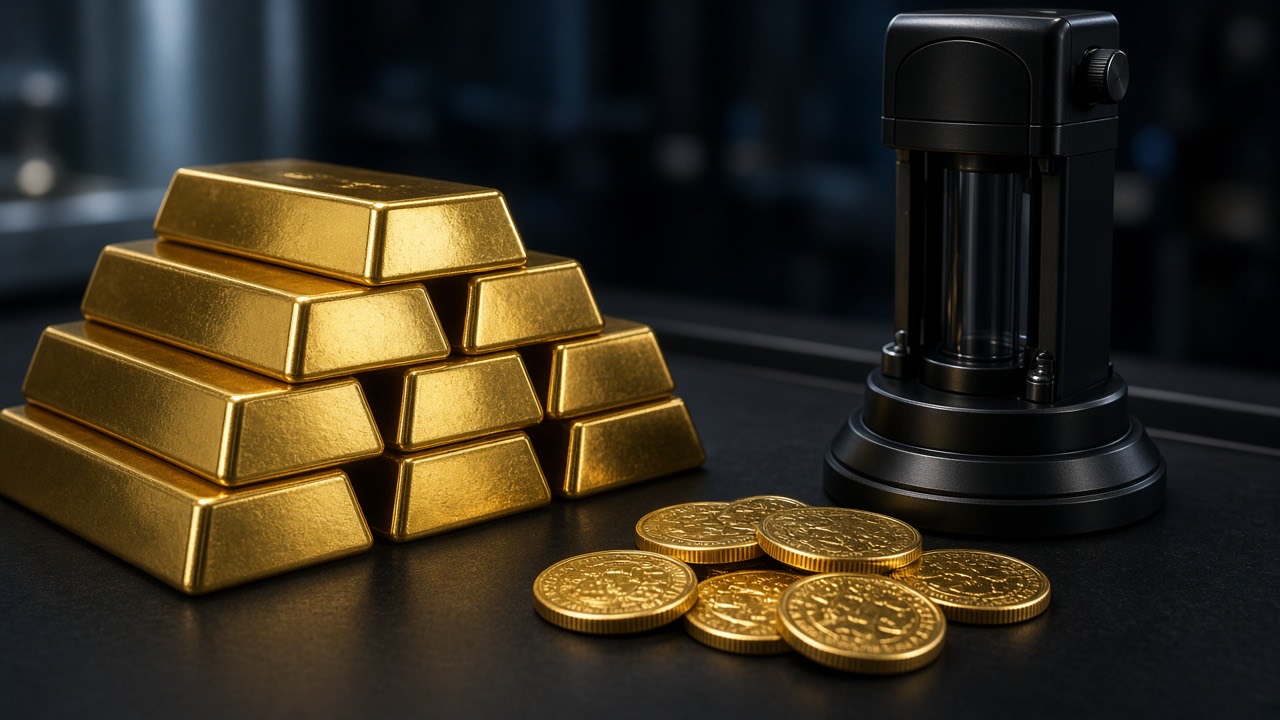
We recommend the MDJ-1200K class when capacity—not brand prestige—is the bottleneck. Coin desks and heavy-chain buyers outgrow 600 g more often than they outgrow 0.001 density resolution. This pick is about headroom and daily workflow: weigh heavy solid pieces without maxing the load cell, run a shop-class density/purity screen, and keep a first-pass number on the ticket before you escalate expensive lots.
Who it is ideal for
Ideal for coin and bullion-adjacent desks, pawn overflow days with thick solid chains, and buyers who occasionally see small bars or stacked solid scrap that would crush a 300 g jewelry densimeter. Many listings in this class also mention printer compatibility, which helps managers who want a paper trail of the screen during customer disputes—as long as everyone understands a slip is not a fire assay certificate.
Who should skip it
Skip it if your solid jewelry stays light (rings and small bracelets under ~200 g). You will park a larger footprint on the counter for no operational gain, and a 300 g premium jewelry unit or a clean 600 g kit will feel less intrusive. Also skip densimetry alone if your main fear is tungsten-filled bars; density of tungsten is too close to high-karat gold for Archimedes to be the closing argument. Write an XRF or assay threshold for those tickets before the machine arrives.
What real buyers get wrong
Tank geometry still matters at 1200 g. Large flat coins or oddly shaped pieces can fail clearance even when the weight is within capacity—check listing photos of the tank and hanger, not just the gram number. Low-star themes in heavy-capacity Amazon densimeter kits mirror the rest of the category: missing accessories, confusing multi-capacity titles, and buyers who expected densimetry to replace every other authenticity tool. Buy the 1200 g class for headroom, confirm the SKU, train solid-sample discipline, and escalate high tickets. That is how coin desks get value from this machine without overclaiming what density can prove.
Key specs → desk benefits
1200 g capacity
Handles heavy solid chains and many small bars without maxing the load cell.
0.001 g/cm³ density display
Gives coin desks a repeatable first-pass number before escalating expensive pieces.
Best Value / Best for Pawn Capacity
RODIETO 600 g Gold Purity Densimeter
Key takeaways
- 600 g headroom for pawn-weight solid chains
- Shop-class 0.001 density without lab pricing
- Confirm seller, accessories, and exact capacity
Pawn and mixed jewelry intake with heavier solid chains
You need Japan-brand prestige more than usable capacity
Quick snapshot
Pros
- 600 g headroom covers most solid chain intake
- 0.001 g/cm³ density resolution is the shop-class sweet spot
- Karat / purity / density in one workflow
- Usually ships as a complete tank + hanger kit
Cons
- Generic brand—seller quality and support vary
- Listing titles can be noisy; you must confirm exact capacity
- Not a tungsten-proof bar tester on its own
- Lower brand recognition if ownership wants “made in Japan” optics
Why we picked it
Why it earns the badge
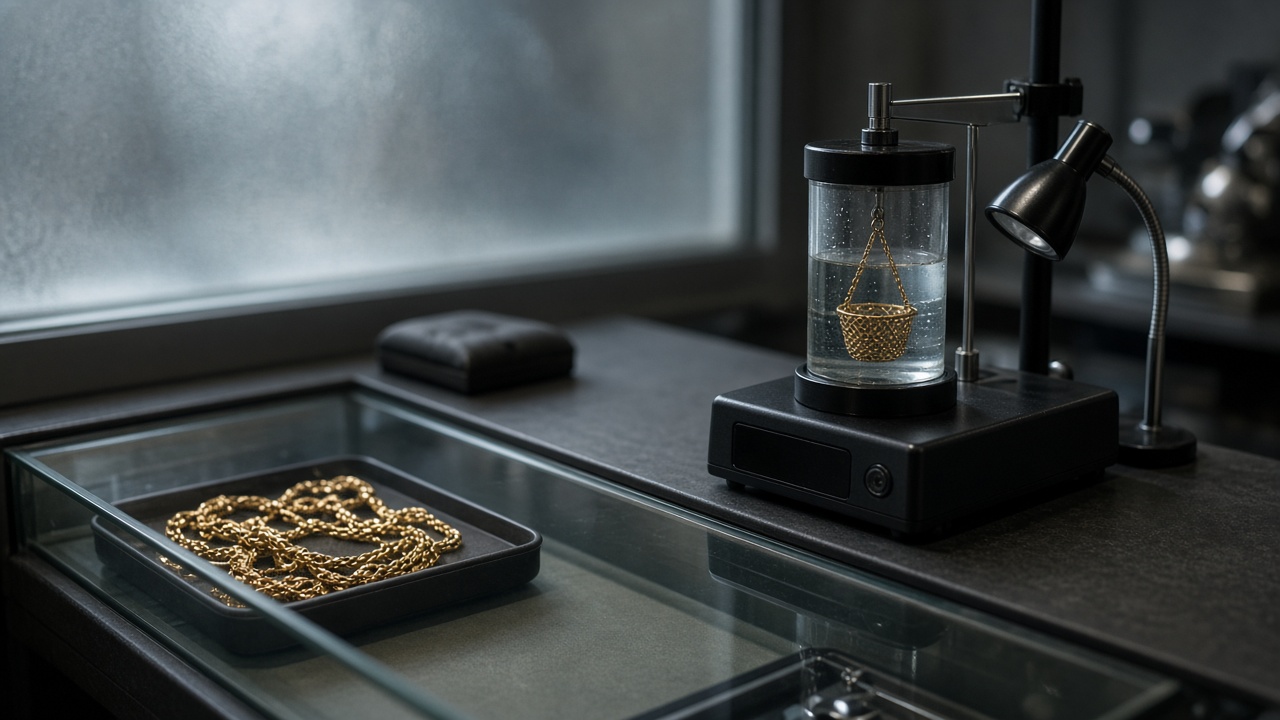
RODIETO’s 600 g class is our best value pick because capacity is the feature that actually saves pawn and mixed jewelry desks from buying twice. A beautiful 300 g branded unit that cannot weigh your heaviest regular chain is a failed purchase—no matter how clean the karat UI looks in the product photos. This kit targets the real workflow: solid scrap, solid chains, fast karat/density/purity screen, and a complete tank + hanger setup so you are not hunting accessories after the box arrives.
Who it is ideal for
Ideal for pawn shops, mixed jewelry buyers, and scrap desks where solid intake regularly lands between 200 g and 500 g. The 0.001 g/cm³ density resolution is the shop-class sweet spot: fine enough for solid karat banding without paying lab-SKU prices. Managers also get a second number (density or purity %) when karat mode looks off, which helps when a second staffer re-checks a disputed piece.
Who should skip it
Skip it if brand prestige is a boardroom requirement—“made in Japan” optics matter in some retail ownership conversations—or if you only ever buy light rings under ~150 g. In that lighter jewelry-only case, a 300 g premium unit may feel cleaner on a glass retail counter and leave more budget for training and distilled-water discipline. Also skip any densimeter as a standalone answer for bullion bars you suspect are tungsten-filled; density alone will not settle that fight.
What real buyers get wrong
Cross-check Amazon seller ratings and the in-box list (scale, tank, hanger, power, any claimed printer) before you checkout. Across generic 600 g densimeter listings, the honest low-star complaints cluster around missing English instructions, accessories that were pictured but not shipped, confusing multi-SKU titles, and buyers who tested hollow or gem-set jewelry then blamed the machine. Those are avoidable with a pre-purchase checklist: confirm capacity on the live listing, screenshot the accessory list, decline hollow/gem-set pieces at intake, and treat the result as a first pass. Do that, and a value 600 g kit like this becomes the workhorse most pawn desks actually need.
Key specs → desk benefits
600 g capacity
Fewer “piece won’t fit” moments on pawn days when solid chains run heavy.
0.001 g/cm³ density resolution
Fine enough for solid scrap karat banding without paying lab-SKU prices.
Karat + purity + density display
Managers can spot-check a second number (density) when karat mode looks off.
Best for Platinum / Finer Purity
Alfa Mirage GKS-300
Key takeaways
- Upgrade for platinum + finer purity—not more capacity
- Ideal after staff already know air/water workflow
- Wrong pick if heavy chains are the real bottleneck
Mixed gold + platinum desks that need finer purity readouts
You only need basic 10K/14K banding or need >300 g capacity
Quick snapshot
Pros
- Finer weighing supports tighter purity display than base GK-300
- Platinum tables help mixed precious-metal counters
- Lower minimum sample weight on the GKS class
- Same non-destructive solid-metal workflow jewelers already trust
Cons
- Same 300 g ceiling—no capacity upgrade over GK-300
- Costs more; overkill if you only screen broad karat bands
- Still blind on hollow / gem-set constructions
- Buyers who needed grams of capacity sometimes regret not buying 600 g instead
Why we picked it
Why it earns the badge
The GKS-300 is our pick when a jewelry desk already understands densimetry and needs finer purity—especially with platinum in the mix. Paying more for another 300 g machine only makes sense if resolution and metal tables are the bottleneck, not capacity. The GKS class is aimed at buyers who already trust the air/water workflow and want a tighter purity display plus platinum tables so mixed precious desks do not bounce between instruments mid-intake.
Who it is ideal for
Ideal buyer: estate jewelry shops, mixed gold/platinum buyers, counters that quote tighter purity on solid lots, and managers who already trained staff on solid-sample rules. If your real pain is heavy chains or small bars, this is the wrong upgrade path. Buying finer decimals on a 300 g load cell will not fix “piece won’t fit” days. Move to 600 g or 1200 g capacity first, then revisit finer resolution only if disputed near-pure lots justify it.
Who should skip it
Skip it if you are budget-first, still learning the air/water workflow, or only need broad 10K/14K banding for scrap payouts. In those cases the base GK-300—or a clear 600 g value kit—delivers more practical upside per dollar. Also skip it if you mainly handle gem-set fashion jewelry; finer resolution does not fix the mixed-density problem of stones and hollow links.
What real buyers get wrong
Honest buyer sentiment in this category often sounds like disappointment about capacity, not about the decimal places. Reviewers who needed grams of headroom regret spending premium money on another 300 g footprint. Others expect densimetry to settle tungsten-bar disputes and walk away frustrated—density of tungsten is too close to high-karat gold for Archimedes alone. Use the GKS-300 as a sharper first-pass tool for solid gold and platinum desk work, pair high tickets with XRF or assay policy, and you get the upgrade you paid for instead of a more expensive version of the wrong problem.
Key specs → desk benefits
0.001 g weight resolution / finer density class
Helps when you are comparing near-pure pieces or platinum marks where coarse banding feels sloppy.
Gold + platinum purity tables
One bench tool covers more of a mixed precious desk without switching instruments mid-intake.
Buying decision
Silver needs weight for purity discrimination, so a high-capacity unit makes more sense than a light jewelry model. Check the live listing for capacity and tank dimensions.
FAQ
Can a densimeter separate sterling from silver plate?
Yes. Silver-plated copper or brass reads around 8.5 to 9 g/cm³, far below sterling at 10.36.
Will a gold karat mode read silver correctly?
No. Gold karat tables do not apply to silver. Use density mode and compare with a silver reference.
Should I rely on density for silver bars over $1,000?
Use it as a first pass only. Confirm with XRF or assay, because density grading on silver is weak and fills are possible.